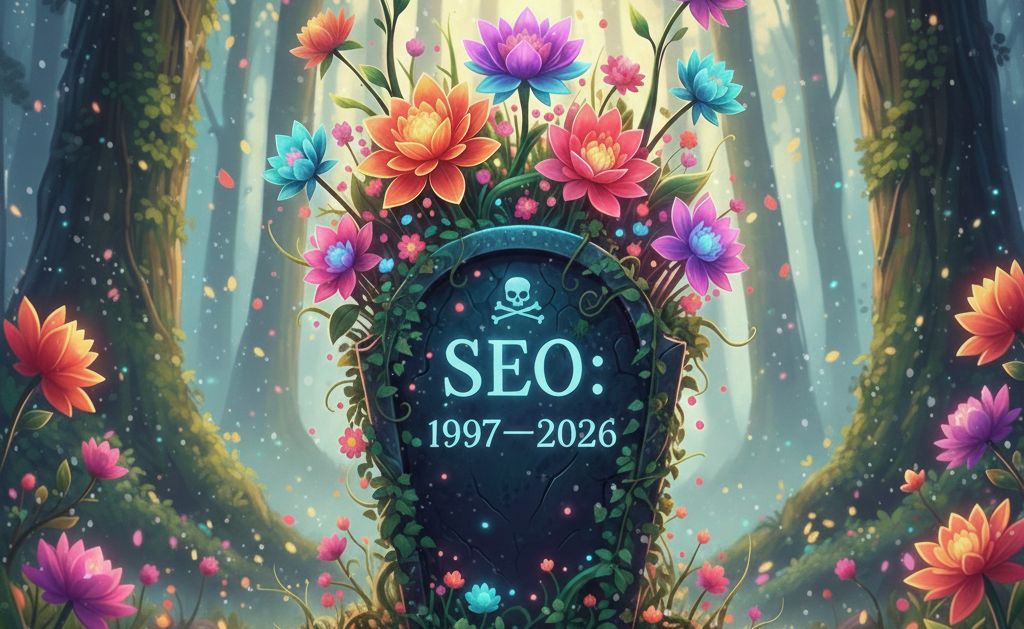
It's no secret that SEO has changed A LOT over the last few years. Google shifted its focus to user experience over technical SEO and then AI came along and has been bouncing the SEO world around all over the place.
So what now?
Is SEO dead? The straightforward answer is no. People constantly turn to search engines to find information, research products, and discover new knowledge. However, it's undeniable that the way Google organizes and delivers search results has evolved. As a result, strategies have to be shifted to optimize your content.
Despite the emergence of new trends and all of the AI that is and will dominate the future of search, the core principle of SEO remains the same. Content written with the user's search intent continues to drive traffic and rankings.
As we discuss the current state of SEO, it's important to recognize that the conversation is not about its death but its transformation! And if you are trying to work on your website or a client's website as an SEO, you'll want to make sure you keep this in mind.
At The Home Business Challenge, I believe in being a practitioner, not just a theorist. That’s why I disclose that I am an affiliate for several tools mentioned in my guides. When you use my links, you’re helping support my work in finding the best "Survival" strategies for home businesses. I’m an Amazon Associate and an affiliate for brands I trust. I’ll always give you my honest take, regardless of the commission, because your trust is my most valuable asset.

Is SEO Dead?
To answer the question as directly as possible: SEO is not dead. But your 2018 strategy needs a funeral! haha. It's not an unreasonable or even uncommon question these days given how AI has taken over search results. However, it is still an essential part of generating traffic and growing a brand - just... different. The statement 'SEO is dead' is a myth that needs debunking. So let's do some debunking, shall we?
SEO has simply evolved, responding to users' changing behaviors and search engines' sophisticated algorithms. The days of keyword stuffing and manipulative link schemes are fading.
SEO has gone from being a predictable robot to a sophisticated, picky, and slightly moody genius! If you work as an SEO Strategist... the strategy part of your job is more essential and more complicated than ever before.
Unique content, AEO (Answering Engine Optimization) and user experience rule the day. You have to be more focused than ever before on creating content that resonates with audiences and meets their search intents.
Google's AI generated results, for example, have changed the game. They now encourage us to answer questions directly in our content. This evolution signifies that SEO is not about chasing algorithms but understanding and serving the human behind the search query.
If you're still trying to "hack" the system with the same tricks we used five years ago, yeah, SEO is dead for you. But if you're ready to evolve your strategies, the traffic is better than ever.
Let's debunk the myths and talk about what's actually working in 2026.
The "SEO is Dead" Myth (And Why It's Total Drama)
It seems like as far back since I used a flip phone, people have been saying that SEO is dead. Every time Google breathes, someone claims the end is near.
The truth? SEO hasn't died and it's not dying; it's matured.
In the good ol' days, we used to just stuff keywords into a page like we were packing a suitcase for a long vacation and see good results.
Today, Google is much, much, much, much smarter. It's looking for human value and it wants to see that we actually know what we're talking about before recommending our content in its search results (hello, EEAT!).
Google's AI Overviews and featured snippets are changing the game, but they haven't killed it. They just mean we have to stop being lazy and thinking of SEO as "easy". It's far more complex, but that doesn't mean we can't simplify it for ourselves or our clients.
Here are three very, very important subjects that are especially important for you to know:
1. SEO is Still Your Secret Traffic Machine (And Your Credibility Booster!)
In the wild world of online business, think of SEO as your secret, and free, traffic and lead generation machine. It's not just about getting "eyeballs" on your site or page, it's about showing people (and Google) that you actually know your stuff.
When you keep popping up at the top of Google, it's like a giant "Trust Me" sign for your brand.
That trust keeps Google happy and results in continual growth, exposure, and what turns a random click into a loyal fan - and eventually, a sale!
These new SEO strategies make your site a dream to use. By focusing on what your readers actually need (instead of just what the robots want), you're building a real connection.
SEO isn't just a box you check, it's the heartbeat of your business that keeps people coming back for more.
2. Quality > Quantity (Every. Single. Time.)
Oh goodness, I have been preaching this to clients for so many years. Long before AI came along. Even though it wasn't a common strategy or even an easy one to pitch to clients, focusing on more quality content over more and more posts is a far more effective and efficient use of time.
Clients struggled to see the value of spending hours optimizing their content. They often just wanted to spit it out and move on. They rarely ever wanted to revisit old content to update it.
And I get it. You spent all that time writing the stuff, it's kind of hard to recognize that you have to work on it more and update it every six to twelve months. But that's the reality!
SEO trends change faster than I can finish my morning coffee, but one thing never goes out of style: quality content.
Instead of pumping out 50 "meh" posts, focus on writing one or two absolute gems that you do the on-page optimization for and plan a content calendar to revisit and update that content every six to twelve months to make sure it's relevant and up-to-date.
Deep, helpful posts are what Google (and your audience) really crave.
High-quality content is your "forever" foundation. And it's evergreen! When you stop writing for the search bots and start writing for real people - answering their burning questions and solving their biggest headaches - you become the go-to authority in your niche.
You know, it's almost like "blogging" has done a complete 180. Before SEO was really important or even a thing, people would actually "blog" and create content for their users. When SEO came along and developed over time, content became a chore and we wrote for the search engines.
And you have to admit, reading an article over the last five years or so is SO annoying. That's because they all seem the same and very robotic. And even lately, a lot of it seems very AI-ey (can that be a word?).
Now, Google prefers that we go back to writing for users again. Just like the good ol' days. 🙂 And I love it. I love writing so it's allowed me to be myself again and write for users, but also for the fun of it! I don't have to worry about where keywords go all of the time. If we are writing about a topic and being thorough about it, they keywords will be there!
In this world full of generic AI fluff and content templates, being the human with the real answers is how you win!
3. Playing the Long Game (The Marathon Mindset)
Let's be real - you can always throw money at ads for a quick boost, but the second you stop paying, the traffic disappears. *poof*
That has always been the biggest selling point for SEO.
That doesn't mean ads or bad or that you shouldn't run ads if you want to. It just means that SEO is the evergreen, long game for traffic and brand growth.
SEO is the total opposite of running ads, really. It's a marathon and not a sprint. And in the end, it's so worth it!
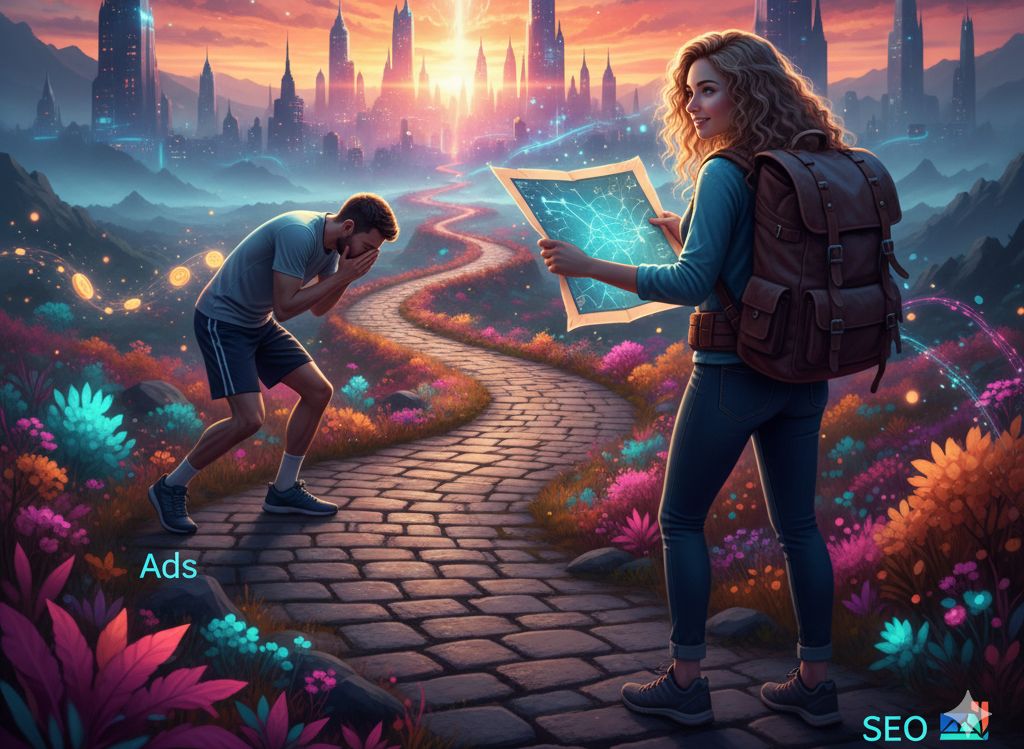
Once you earn those top spots through hard work, they're likely going to be yours to keep and the traffic just keeps rolling in even while you sleep - and you're not paying for it!
A great SEO strategy builds a business that lasts. It also levels the playing field so the "little guys" like us can compete with the big-budget brands.
SEO is and always has been about being resilient and building an organic stream of users, leads, and customers who genuinely want what you're offering.
So stick with it, and your future self will thank you!
3 Things to Stop Doing Right Now (R.I.P.)
If you're doing these, you're basically shouting into a void. Let's leave these three things in the past:
1. Keyword Stuffing
Keyword stuffing has fallen very out of favor with Google, other search engines, and especially your readers!
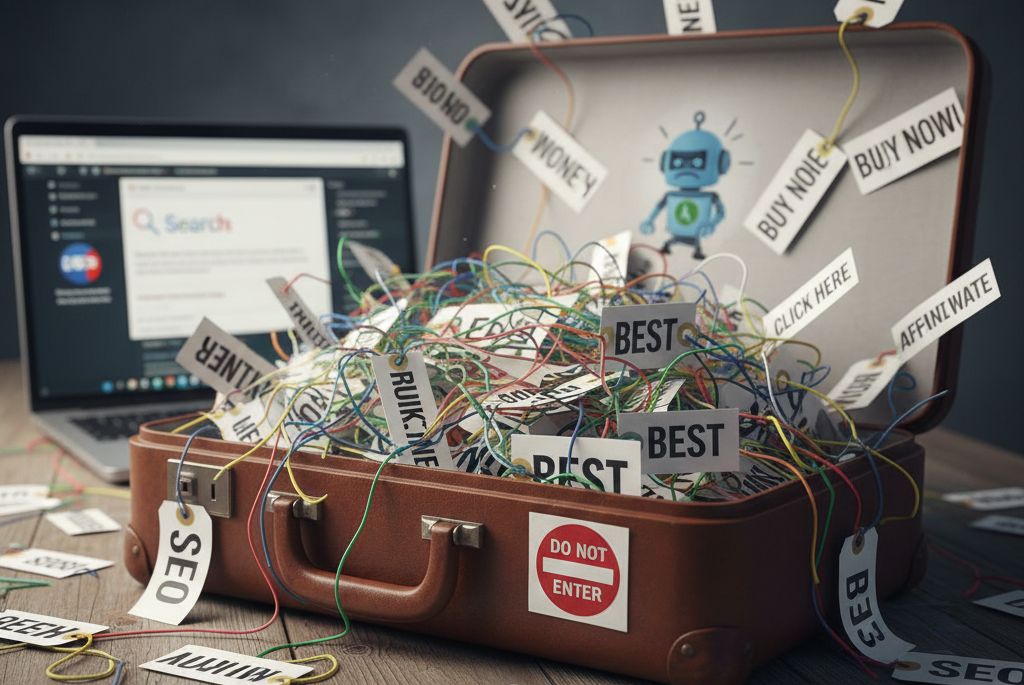
If your sentence reads like: "Best affiliate marketing tools for affiliate marketing people using tools for affiliate marketers," just stop. Google knows. We all know. It's gross. 🙂
While it's still a lot more effective to focus on long-tail keywords with lower difficulty scores and less competition, it's even more effective these days to simply focus on writing naturally. Don't write for Google anymore. Write for your audience.
2. Buying Sketchy Links
Hopefully you stopped doing this a long time ago, but it's more important than ever today.
Those "5,000 Backlinks for $5" packages on Fiverr? Those are a one-way ticket to a Google penalty. Don't do it.
3. Thin AI Content
Look, I love AI tools as much as the gal, but if you just hit "generate" and post it without adding your own spice, you're going to get buried.
Google wants you, not a robot. And so do your readers! And Google can tell... you better believe it! Haha. And truthfully, so can readers these days! AI can really spit out slop sometimes, so you better use it as a helpful tool rather than a writer.
SEO That Still Works in 2026
Today, certain techniques continue to prove their worth. The key is adapting and knowing how to still get the traffic!
1. Search Intent Over Keywords
Instead of asking, "what word should I use?", ask, "what is my reader actually trying to solve?"
If they are searching for, "how to start a home business," don't just give them a list of tools. Give them a roadmap. Solve their problem, and Google will fall in love with you. Not in a weird way.
2. Flash Your Credentials (EEAT)
Google wants to see your experience. It wants to know about your "expertise." So talk about your wins. Talk about your fails! (Seriously, I've had so many). When you show that you're a real human who has actually done the work, you become and authority that robots can't touch.
3. Get Technical (But Keep it Simple)
You want to make sure you're still doing the right things along the way when it comes to on-page SEO optimization. You know, including alt texts, proper heading structure, relevant headings, proper grammar, and spelling (when possible!). Those little things can still help.
Additionally, make sure your site is as fast as possible and uses Structured Data. I always tell people to think of structured data as "labels" for Google's AI. It helps the robots understand that your post or page is a guide, a review, or a recipe without them having to guess.
The Verdict: Don't Panic!
SEO isn't a "set it and forget it" thing anymore. It's a relationship. It's a relationship with your reader and with Google. It takes a bit more work and strategy than before, but the results are more sustainable and evergreen. It's such a game, isn't it?
Think of it like this:
The "death" of old-school SEO is actually a huge opportunity for us. While everyone else is quitting because it "got too hard," we're going to pivot, provide real value, and claim those top spots!
Are you ready to stop messing around and actually master this?
Grab a coffee (or three), update those old posts, and let's show Google what we've got!
 No more wasting time learning – let’s start doing! My name is Becca and I’m your new digital BFF! 🙂 Let’s crush our side hustles together!
0 Comments